
£ 9,495 Original price was: £ 9,495.£ 8,495Current price is: £ 8,495.
Who would find this course beneficial?
This qualification is designed for qualified healthcare professionals who are registered with a recognised healthcare regulatory body and wish to develop advanced clinical knowledge and practical competence in aesthetic injectable treatments.
It is particularly beneficial for medical practitioners, dentists, nurses, pharmacists and other eligible healthcare professionals who wish to provide botulinum toxin and dermal filler treatments safely and effectively within professional aesthetic practice.
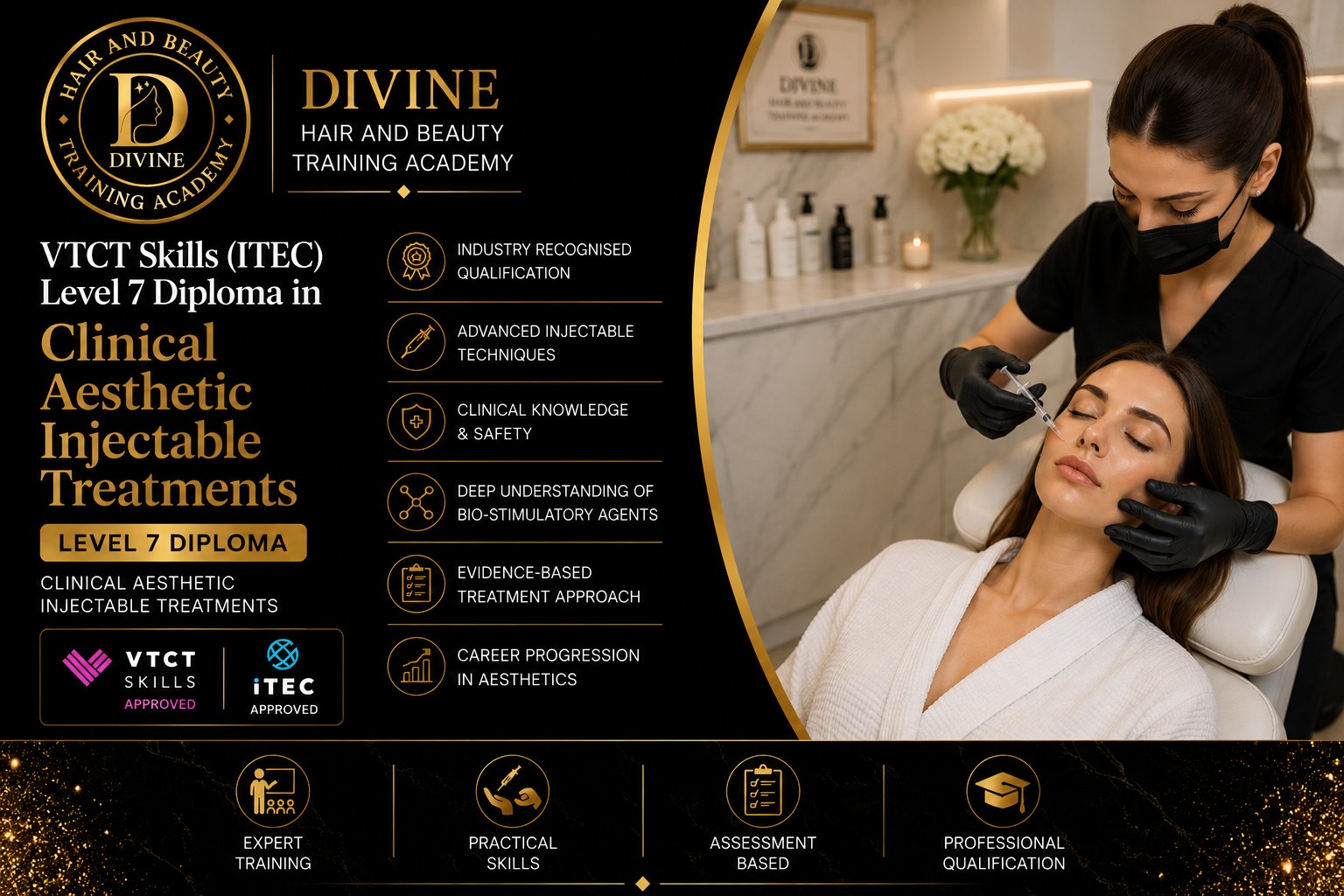
Learners will develop advanced patient assessment, consultation and treatment planning skills, together with a detailed understanding of facial anatomy, injectable treatment protocols and complication management, enabling them to deliver safe, evidence-based aesthetic treatments with confidence.
The qualification supports clinical competence, patient safety, professional development and progression within the rapidly growing medical aesthetics sector.
Level 7
Full Time
MA7D1
| TELEPHONE | 02072675587 |
|---|---|
| Mobile | 07752793964 |
Course Content
The qualification will cover the following areas:
Principles of Aesthetic Procedures
Learners will develop knowledge of aesthetic medicine principles, professional responsibilities, ethical practice, health and safety requirements and patient-centred care.
Principles and Practice of Aesthetic Patient Assessment
This unit focuses on consultation skills, patient assessment, treatment planning, informed consent and managing patient expectations.
Anatomy and Physiology for Aesthetic Procedures
Learners will develop an advanced understanding of facial anatomy, physiology and structures relevant to aesthetic injectable procedures.
Principles and Practice of Botulinum Toxin Use in Aesthetic Procedures
Training includes product knowledge, treatment planning, administration techniques, complication management and safe clinical practice for botulinum toxin treatments.
Principles and Practice of Dermal Filler Use in Aesthetic Procedures
Learners will gain knowledge and practical skills relating to dermal filler procedures, facial assessment, injection techniques, risk management and patient care.
Literature Review Skills for Clinical Study in Aesthetic Practice
This unit develops research, critical evaluation and evidence-based practice skills relevant to modern aesthetic medicine.
Entry Requirement
Learners must be aged 19 years or over.
Applicants must be registered with a recognised professional healthcare statutory regulatory body and have no conditions attached to their professional practice.
Additionally, learners are required to evidence achievement of a relevant Level 6 qualification (degree level or equivalent).
Learners are not required to be independent prescribers as clinical oversight is provided by a qualified prescribing practitioner.
Duration
This qualification includes approximately 175 Guided Learning Hours (GLH) and 600 Total Qualification Time (TQT).
Training schedules may vary depending on the chosen delivery programme.
Costs
Flexible payment options may be available.
Qualification Awarded
Upon successful completion, learners will be awarded the:
VTCT Skills (ITEC) Level 7 Diploma in Clinical Aesthetic Injectable Treatments.
Assessment Methods
Assessment is achieved through:
Learners must successfully complete all required assessment components to achieve the qualification.
KIT Required
Learners must attend in professional clinical uniform (tunic, trousers and closed shoes).
Learners are responsible for providing all treatment products required for practical training and assessment activities at their own expense.
Progression Opportunities
This qualification supports advanced clinical practice within aesthetic medicine and provides progression into specialist Level 7 aesthetic treatment pathways and advanced professional development opportunities.
Successful learners may progress to advanced qualifications including bio-stimulatory injectable treatments and other specialist aesthetic procedures.
T&C
Course fees are non-refundable once confirmed.
Certificates are issued only after successful completion of all assessments, examinations, clinical case studies and practical assessment requirements.
Learners are expected to comply with all academy policies, health and safety procedures and professional standards throughout the qualification.


